
Cooperative play with shared decisions

When everyone fights the board instead of each other, cutthroat anxiety disappears. But cooperative games need mindful boundaries to keep dominant players from commandeering every turn.

Mindset: Shared Victory Challenge: Eliminating Quarterbacking Recommended: Limited Communication

The "Alpha Player" Trap and How to Neutralize It

Cooperative games solve the sting of direct player conflict. When you lose together to an escalating flood or ticking timer, you laugh, reshuffle, and reset. However, games with fully open information (like classic Forbidden Island or Pandemic) carry a notorious vulnerability: one experienced player can effectively play solitaire while directing everyone else like game pieces.

"If one voice is telling three other adults which cards to discard, you are not playing a cooperative game—you are watching a single-player demo." — Table Governance Rule

The solution is not to silence passionate players through scolding, but to select games that mechanically enforce private knowledge or limited communication.

Cooperative titles with structural equality

These verified designs prevent any individual from dictating the group's decisions.

Soft-lit render of cards held facing outwards in Hanabi style
Restricted Information

Hanabi: Cards Held in Reverse

In Hanabi, players hold their cards facing away from themselves. You see everyone else's hands, but not your own. By spending limited clue tokens, the table conveys partial color or number hints. Because you never know your own cards, no alpha player can instruct you what to do without spending precious group tokens.

Dynamic: Deductive Trust 2–5 Players
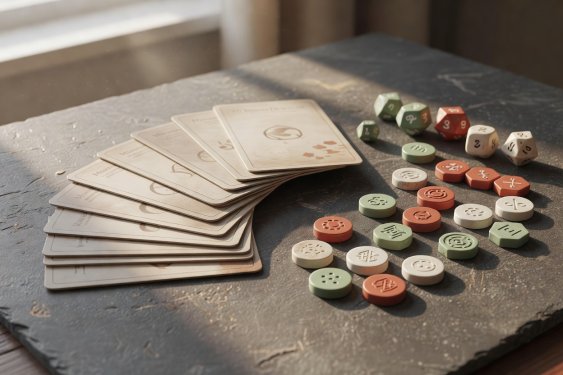
Soft-lit render of mission cards and task tokens
Trick-Taking Unity

The Crew: Mission Deep Sea

A cooperative trick-taking adventure where players fulfill specialized sub-missions (e.g., "Win a trick with a 1" or "Win no green cards"). Crucially, verbal table talk about hand contents is strictly forbidden by the rules. Everyone must read the cadence of card play independently, guaranteeing agency for every participant.

Dynamic: Silent Coordination 3–5 Players

Establish the Golden Rule: "Your hand, your choice"

Before launching any cooperative title, the host should announce: "Suggestions may be offered only when requested by the active player. If they want to play a suboptimal card, let them do it! Exploring mistakes together is where the fun lives."

Managing tension without exhaustion

Cooperative games produce heightened emotional spikes. When the group survives on the final card or suffers an agonizing near-miss, adrenaline peaks. Keep these hosting habits in mind:

  • Celebrate Near Misses

    If the group fails mission 14 in The Crew, celebrate the narrow margin: "We were two tricks away! That was an incredible round." Deframe defeat so nobody feels personally responsible.

  • Limit Missions to Three Consecutive Attempts

    If a specific challenge proves insurmountable after three tries, pause the game, take a snack break, or switch to a lighter format before frustration settles in.

  • Debrief Joyfully

    Allow 5 minutes after the box closes for everyone to talk through their secret thought processes. Hearing why a friend held back a trump card is often the highlight of the night.

Explore Casual Tabletop Formats →